Blockchain Forum at a Nordic Parliament: the Danish Minister for Taxation wants crypto tax reform, and the data shows what’s at stake


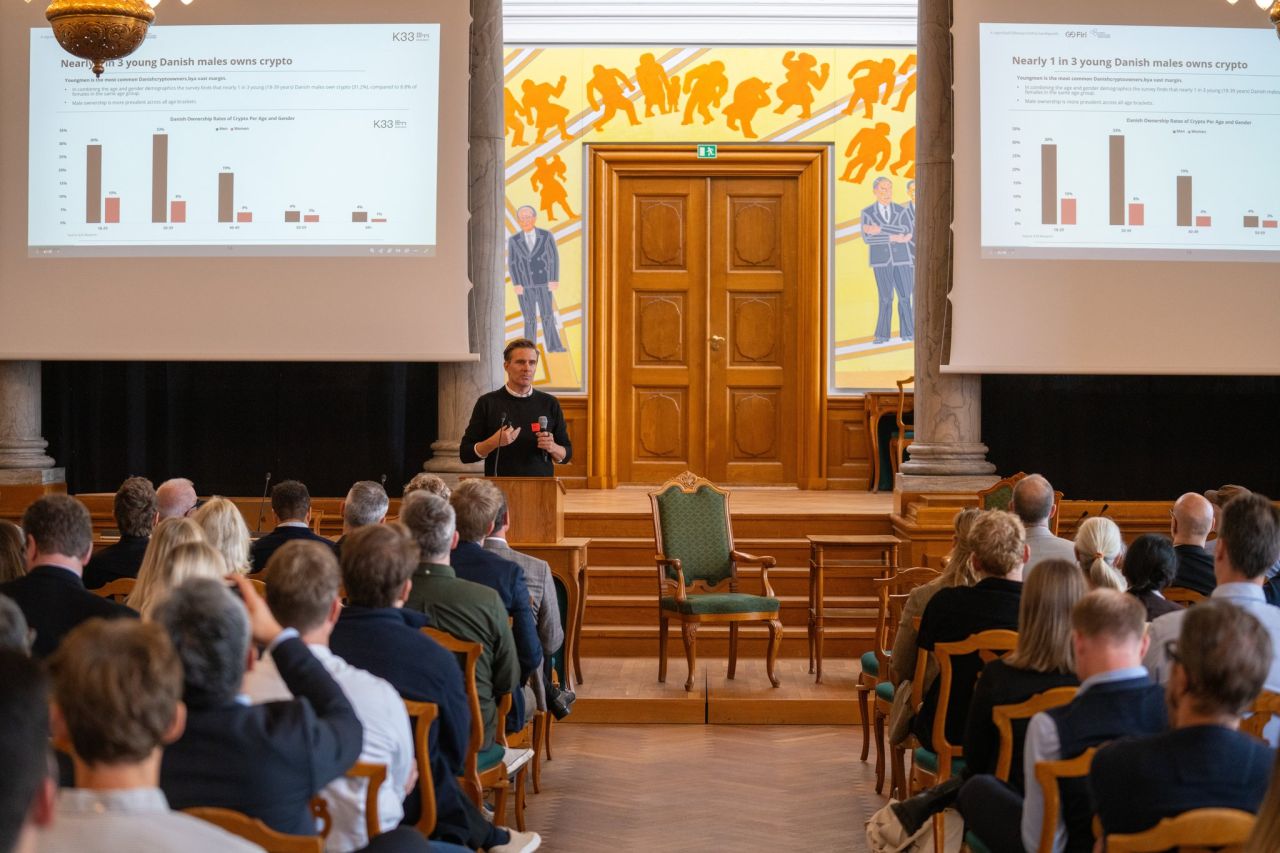
On September 17, Nordic Blockchain Association gathered politicians, authorities, banks and industry in Fællessalen at Christiansborg, the Danish parliament, for the second annual Blockchain Forum. The question of the day was simple: What is the potential for growth, income and innovation if the blockchain and digital assets industry becomes a real political priority?
Crypto tax reform as a priority
The Danish Minister for Taxation and Growth, Jakob Engel-Schmidt (M), made it clear from the podium that crypto taxation reform is a priority for his ministry for the legislative year ahead.
That is an important signal. Today, crypto-assets are taxed under a tax act from 1922 - a law that is more than 100 years old and was written long before digital assets were invented. More than half a million Danes own crypto-assets, and many of them are caught in an imbalance where gains are fully taxed but losses are only partially deductible.
The minister's promise has since been followed by action. On October 6, crypto tax reform was included in the government's legislative programme for 2026-2027, and a bill is expected to be presented to parliament in February 2027.
20,000 jobs and DKK 5.4 billion in additional tax revenue
Lars Lin Villebæk, Senior Investment Manager at Copenhagen Capacity, the investment promotion agency for Greater Copenhagen, presented an analysis of what a proactive approach to MiCA, the EU's regulation of crypto-assets, could mean for Denmark.
- Today: By mid-September 2026, around 345 companies across the EU/EEA held a MiCA licence. Denmark had granted 7 out of 25 applications, and Danish companies are now seeking licences in Latvia and Norway.
- The opportunity: If Denmark follows Latvia's proactive approach and grows its share of the European market from around 1.5% to 5% by 2030, it could mean roughly 175 companies, 20,000 jobs (8,000 of them direct) and around DKK 5.4 billion a year in personal income tax.
- The alternative: If Denmark does not act, the licences will still be issued, just in Riga, Vilnius and Frankfurt, and the companies, jobs and tax revenue will go with them.
To capture that growth, Copenhagen Capacity recommended six measures: fast-track licensing at the Danish FSA, clear and competitive tax rules, a guarantee that licensed companies can keep their bank accounts, investment in talent and education, an ambitious public target such as 20,000 jobs and 50 licences by 2030, and the public sector as an early customer.
Perspectives from banks, lawyers and the blockchain industry
Svante Hudák-Hildebrandt (Ultrasound Capital) gave an introduction to blockchain, and lawyer Nele Rickelt (ADVORA Law) and Mads Strange, tax spokesperson for Liberal Alliance, described how Danish citizens are affected by the current tax rules. Mads Clemmensen, Head of Digital Assets at Danske Bank, shared the bank's view on digital assets, and Joakim Brüchmann (Pluto Markets) explained why crypto is often people's first step into investing, and why DAC8 data should be pre-filled in the annual tax assessment.
The forum closed with a panel on Denmark's competitiveness in the global technology race, with Freja Brandhøj (Danish Chamber of Commerce), Jacob Stenum Czepluch (Solidity) and Mads Strange (Liberal Alliance), moderated by NBA CEO Jakob Mikkel Hansen.
What comes next
The message from the forum was clear: to capture this growth, Denmark needs a new crypto tax law, a national strategy for digital assets and regulation that enables growth, such as fast-track licensing and guaranteed access to bank accounts for MiCA-licensed companies. The first is now on its way.
The forum is part of NBA's parliamentary work across the Nordics, and this year's edition was co-hosted with Liberal Alliance.
Thank you to the Minister for Taxation and Growth, to Liberal Alliance, to all our speakers and to everyone who joined us at Christiansborg.